
Family Feuds and Fortune: Understanding Estate Litigation

Why Estate Litigation Matters to Texas Families
What is estate litigation? Estate litigation refers to legal proceedings that resolve disputes over a deceased person’s assets, including challenges to wills, trust disputes, and claims of fiduciary misconduct. These court cases can occur before, during, or after the probate process and often involve family members, beneficiaries, and other interested parties fighting over inheritance rights.
Quick Answer – Estate Litigation Basics:
- Definition: Legal disputes over a deceased person’s assets and estate distribution
- Common Types: Will contests, trust disputes, executor/trustee removal, breach of fiduciary duty claims
- Who Can File: Beneficiaries, heirs, spouses, creditors, and others with financial interest in the estate
- Timing: Can happen before, during, or after probate proceedings
- Cost: Often tens of thousands of dollars or more if cases go to trial
When a loved one passes away, the last thing families want to deal with is a legal battle. Yet estate disputes happen more often than you might think. As one legal expert noted, “Following a death in Texas, the decedent’s estate is divided up and passed on to beneficiaries. In some cases, the individual in question will have left a will, ensuring they have a plan in place for their estate assets.”
But even the best-laid plans can go wrong. Family members may question whether a will is valid. Executors might mismanage assets. Trustees could act in their own interests rather than the beneficiaries’. These situations create what lawyers call “estate litigation” – formal legal disputes that require court intervention to resolve.
The Texas probate system is complex and unique, making these disputes particularly challenging to steer without proper legal guidance. Understanding what estate litigation involves can help you protect your rights and your family’s legacy during an already difficult time.
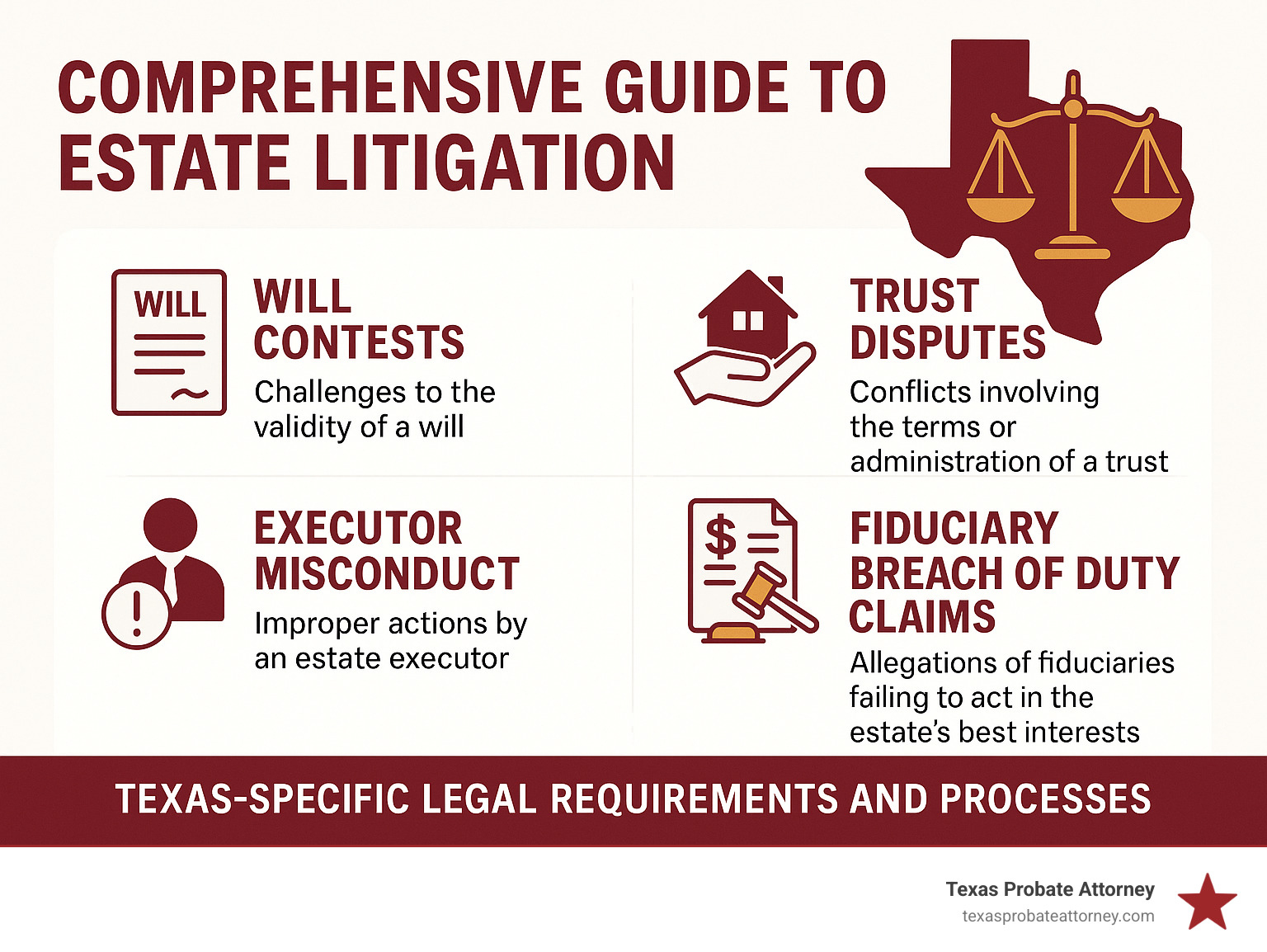
What is Estate Litigation? A Comprehensive Overview

What is estate litigation? Simply put, it’s any legal proceeding where families and other interested parties turn to the courts to resolve disputes they can’t settle on their own regarding a deceased person’s assets. These cases often arise when emotions run high and family members disagree about what the deceased person really wanted.
Think of estate litigation as the legal world’s way of handling family fights that have gotten too big to solve around the kitchen table. Unlike a simple contract dispute between strangers, these cases involve family dynamics, grief, and significant financial stakes that can unfortunately tear families apart if not handled with care.
The scope of estate litigation goes far beyond just arguing over whether a will is valid. It covers will contests when someone believes the will was signed under suspicious circumstances or when the person lacked mental capacity. It includes trust disputes when beneficiaries question how a trustee is managing their inheritance. Fiduciary misconduct cases arise when executors or trustees put their own interests ahead of the people they’re supposed to help.
Asset disputes can emerge over property ownership or how much something is worth, while creditor claims involve disagreements about debts the deceased owed or money owed to them. Sometimes guardianship issues become part of the mix when families disagree about who should care for someone who can’t make decisions for themselves.
How Estate Litigation Differs from Probate Litigation
Many people think “estate litigation” and “probate litigation” mean the same thing, but they’re actually quite different. Understanding this distinction can help you figure out what type of legal help you need.
| Aspect | Estate Litigation | Probate Litigation |
|---|---|---|
| Scope | Broader range of conflicts including trust disputes, asset ownership disagreements, and financial misconduct | Limited to will validity, executor misconduct, and creditor claims |
| Timing | Can occur before, during, or after probate | Only occurs during the probate process |
| Assets Involved | All estate assets, including those in trusts that bypass probate | Only probate assets subject to court supervision |
| Court | Various courts depending on the issue | Probate court |
| Common Cases | Trust disputes, challenging trustee actions, fraud allegations | Will contests, executor removal, creditor claims |
Texas Probate Litigation focuses specifically on issues that come up during the probate process – things like challenging whether a will is valid, removing an executor who’s not doing their job, or dealing with creditors who want to be paid from the estate. Probate is the court process that oversees the administration of a decedent’s estate, making sure everything gets distributed properly according to the will or state law.
Estate litigation casts a much wider net. It can involve disputes over trusts that never go through probate at all, conflicts that arise years before someone dies, or problems that surface long after probate is finished. Since trusts typically operate outside of probate court without ongoing supervision, disputes involving them fall under this broader category.
Who Can Initiate an Estate Dispute in Texas?
You can’t just walk into court and file an estate lawsuit because you’re curious or upset. Texas law requires you to have “standing” – which means you need a legitimate financial interest in the estate that could be affected by the outcome. The Texas intestate succession statute helps define who has these kinds of interests.
Beneficiaries – people specifically named in a will or trust to receive assets – clearly have standing. Heirs who would inherit under Texas law if there were no will also qualify. Surviving spouses have particularly strong inheritance rights under Texas community property law, and children (both biological and adopted) have inheritance rights that the law protects.
Creditors who are owed money by the deceased can also file disputes, as can personal representatives like executors or administrators who are managing the estate. Trustees managing trusts sometimes need court guidance when they face difficult decisions or conflicts with beneficiaries.
The key is showing that you have a real financial stake in what happens. If you’re challenging a will, for example, you need to demonstrate that you would receive more money or property under a previous will or under state intestacy laws if the current will were thrown out. Courts won’t entertain disputes from people who are just stirring up trouble without any skin in the game.
Common Triggers: When and Why Estate Disputes Arise

Estate fights usually come from a handful of predictable problems rather than a single surprise. Most center on unclear planning documents, unexpected disinheritance, long-standing family tension, or suspected fiduciary misconduct. If a will suddenly cuts out a child, or a trustee keeps beneficiaries in the dark, emotions rise and courtrooms follow.
Will Contests: Challenging the Validity of a Will
Texas allows challenges only on specific legal grounds—not because someone dislikes the will. The most common are:
- Lack of testamentary capacity diminished mental ability when the will was signed.
- Undue influence pressure or manipulation by another person.
- Fraud or forgery the document or signature is fake.
- Improper execution the will wasn’t signed or witnessed as Texas requires.
Real-life red flags include a will signed days before death that reverses prior plans or multiple conflicting wills found after death. Learn more at Contesting a Will in Texas and Grounds for Challenging a Will.
Trust Disputes and Fiduciary Misconduct
Because most trusts operate outside probate court, misconduct can go unchecked until someone speaks up. Common claims include:
- Breach of fiduciary duty a trustee puts personal interests first.
- Mismanagement risky investments or failure to safeguard assets.
- Self-dealing or failure to account using trust funds for themselves or refusing to share records.
When these issues surface, beneficiaries often need a Trust Litigation Lawyer or must seek to Remove an Executor in Texas.
Navigating the Storm: The Estate Litigation Process Step-by-Step

Although every case has its quirks, most follow the same six stages:
- Consultation & Evaluation – An attorney reviews wills, trusts, financials, and Texas law to decide whether a claim is worth filing.
- Pre-Suit Investigation – Collect documents, interview witnesses, and line up any needed experts.
- Filing the Lawsuit – A petition or complaint is filed in the proper Texas court, officially opening the matter.
- Discovery – Both sides exchange information through written questions, depositions, and document demands. This is usually the longest phase.
- Mediation & Settlement Talks – Texas judges often require mediation. Many disputes end here because parties regain control over the outcome and save money.
- Trial & Possible Appeal – If no agreement is reached, the court (or a jury) decides. Either side can later appeal on legal errors.
For families, remembering that most cases settle before trial can relieve anxiety. Tools like Using Mediation in Probate Cases often spare loved ones the cost and strain of courtroom combat.
Outcomes, Costs, and Finding the Right Legal Partner

What results can you expect?
Depending on the dispute and proof, Texas courts may:
- Validate or throw out a will (or parts of it)
- Remove or replace a trustee/executor
- Order restitution when funds were misused
- Modify a trust to fix unclear terms
- Approve a negotiated settlement that rewrites distributions without a trial
What will it cost?
Litigation is not cheap. Typical expenses include:
- Attorney fees – $300–$600+ per hour in major Texas cities
- Court & filing fees – a few hundred to a few thousand dollars
- Experts & discovery – medical or financial experts often cost thousands more
Simple cases that settle quickly might stay under $25,000. Hotly contested matters that reach trial can top $100,000. Losers may be ordered to cover the winners costs, and fiduciaries found at fault can become personally liable.
Why the lawyer you choose matters
Texas probate law has strict deadlines and technical rules. Missing one can sink an otherwise strong claim. Seasoned counsel can:
- Meet every procedural requirement
- Value and marshal evidence quickly
- Negotiate settlements that preserve family ties
- Advocate effectively if the case reaches trial
Texas Probate Attorneys serve clients from offices in Houston, Fort Worth, and Austin, guiding families through will contests, trust disputes, and fiduciary misconduct claims. For help, reach out to a Texas Fiduciary Litigation Attorney.
Protecting Your Legacy and Rights
Estate litigation is a challenging process that requires careful navigation of Texas law. Understanding the grounds for a dispute, the step-by-step legal process, and the potential outcomes is the first step toward protecting your rights and your family’s legacy. Whether you are contesting a will, questioning a trustee’s actions, or defending an estate, having knowledgeable guidance is essential.
What is estate litigation touches families at their most vulnerable moments. When you’re already grieving the loss of a loved one, the last thing you want is a legal battle over their estate. Yet these disputes happen more often than most people realize, and they can tear families apart if not handled properly.
The good news is that understanding your rights and options can help you steer these troubled waters. What is estate litigation encompasses a broad range of disputes over deceased persons’ assets, from will contests to trust disputes to fiduciary misconduct claims. Unlike probate litigation, which focuses specifically on the court-supervised probate process, estate litigation can involve non-probate assets and occur at any time.
Key insights for Texas families include recognizing that you need standing to sue – meaning a legitimate financial interest in the estate outcome. You can’t simply file a lawsuit because you’re unhappy with how assets were distributed. Common triggers that lead to disputes include unclear documents, unexpected disinheritance, and fiduciary misconduct.
The litigation process itself involves multiple phases from investigation through trial, though many cases settle before reaching court. This is often a relief for families, as costs can be substantial – often tens of thousands of dollars or more for complex cases. Having experienced legal representation is crucial given the complex legal framework and high stakes involved.
As one legal expert noted, “It is very difficult when a close family member or friend passes away. If there is litigation over the estate of that person, the process will seem even more overwhelming.” This is exactly why having compassionate, experienced legal counsel makes such a difference.
At Texas Probate Attorneys, we understand that estate litigation isn’t just about legal technicalities – it’s about protecting your family’s legacy, ensuring your loved one’s wishes are honored, and preserving relationships for future generations. Our personalized approach combines aggressive advocacy with sensitivity to the emotional challenges our clients face.
We work diligently to achieve favorable outcomes while minimizing the time, cost, and family disruption that litigation can cause. With over 40 years of combined experience, we’ve seen how the right legal guidance can help families steer these challenges successfully and protect what matters most.
Whether you’re facing a will contest, trust dispute, or fiduciary misconduct claim, don’t steer these complex legal waters alone. The attorneys at Texas Probate Attorneys provide personalized representation to guide clients through these complex matters. For assistance with your case, contact a Texas Fiduciary Litigation Attorney.
Estate litigation is not just about money – it’s about justice, family harmony, and ensuring that the people you love are protected even after you’re gone. With the right legal partner by your side, you can face these challenges with confidence and achieve the resolution your family deserves.